A simple guide to Possum, MUM, Fred, Pigeon, and Mobile-First Indexing by Google
Introduction
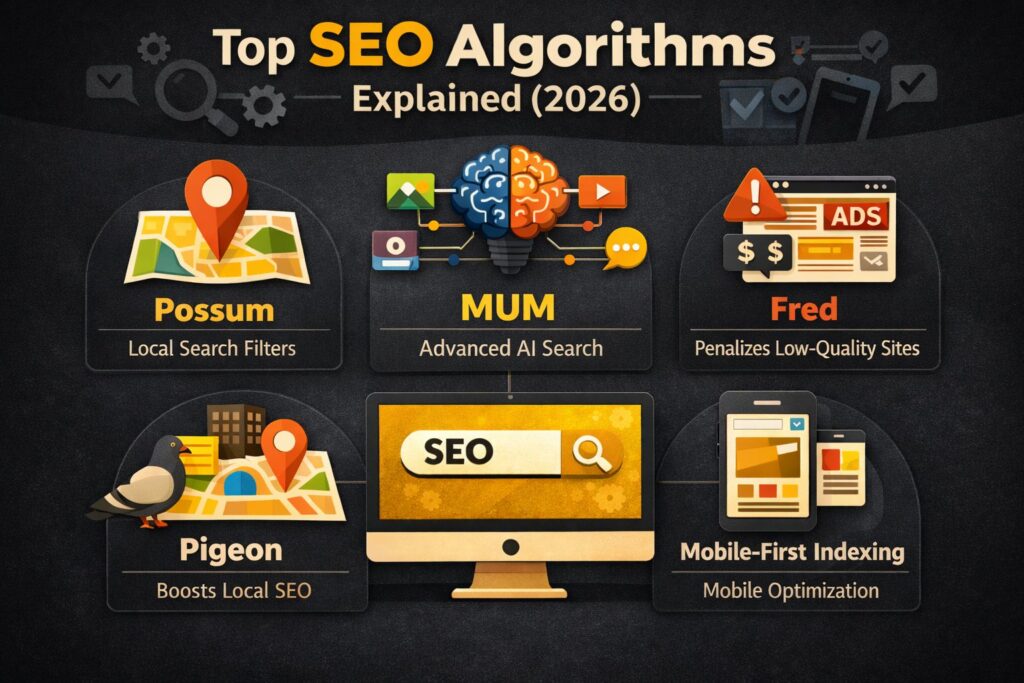
Search engine optimization (SEO) is constantly evolving, and understanding how search algorithms work is essential for digital marketers and businesses. Google uses multiple algorithms to deliver the most relevant and useful results to users. Among them, Possum, MUM, Fred, Pigeon, and Mobile-First Indexing play a crucial role in improving search quality, user experience, and local relevance. This blog explains these five important algorithms in a simple and practical way.
- Possum Algorithm
The Possum algorithm focuses on improving local search results by filtering out duplicate or similar listings. It ensures that businesses located close to each other don’t unfairly dominate search results. Possum also considers the user’s physical location, meaning search results can vary from person to person. For example, if someone searches “henna artist near me,” they will see results based on their exact location. This algorithm is especially important for local businesses aiming to increase visibility.
- MUM (Multitask Unified Model)
MUM is one of the most advanced AI algorithms introduced by Google. It can understand and process information across multiple formats such as text, images, and videos. MUM helps the search engine answer complex queries more accurately by understanding context and intent deeply. For instance, a user can upload an image and ask questions related to it, and MUM will provide relevant answers. This makes search more interactive and intelligent.
- Fred Algorithm
The Fred algorithm targets low-quality websites that focus mainly on generating revenue rather than providing value to users. It penalizes sites with excessive ads, thin content, and poor user experience. Websites that prioritize helpful, informative, and user-focused content are rewarded, while those using aggressive monetization strategies may see a drop in rankings. Fred emphasizes the importance of quality over profit-driven content.
- Pigeon Algorithm
The Pigeon algorithm enhances local search by connecting traditional search signals with location-based factors. It improves the accuracy of local results and integrates them more closely with map listings. This means businesses with strong local SEO practices, such as accurate address details and good reviews, are more likely to rank higher. Pigeon is highly beneficial for small and local businesses trying to reach nearby customers.
- Mobile-First Indexing
With the majority of users browsing on mobile devices, Google introduced Mobile-First Indexing. This means the mobile version of a website is considered the primary version for ranking. Websites that are not mobile-friendly may experience lower rankings. Fast loading speed, responsive design, and easy navigation are essential to succeed under this algorithm.
Conclusion
Understanding these SEO algorithms—Possum, MUM, Fred, Pigeon, and Mobile-First Indexing—is crucial for building a strong online presence. Each algorithm focuses on improving different aspects of search, from local visibility to content quality and mobile usability. By creating user-friendly, high-quality, and mobile-optimized content, businesses can stay ahead in the ever-changing SEO landscape and achieve better search rankings.